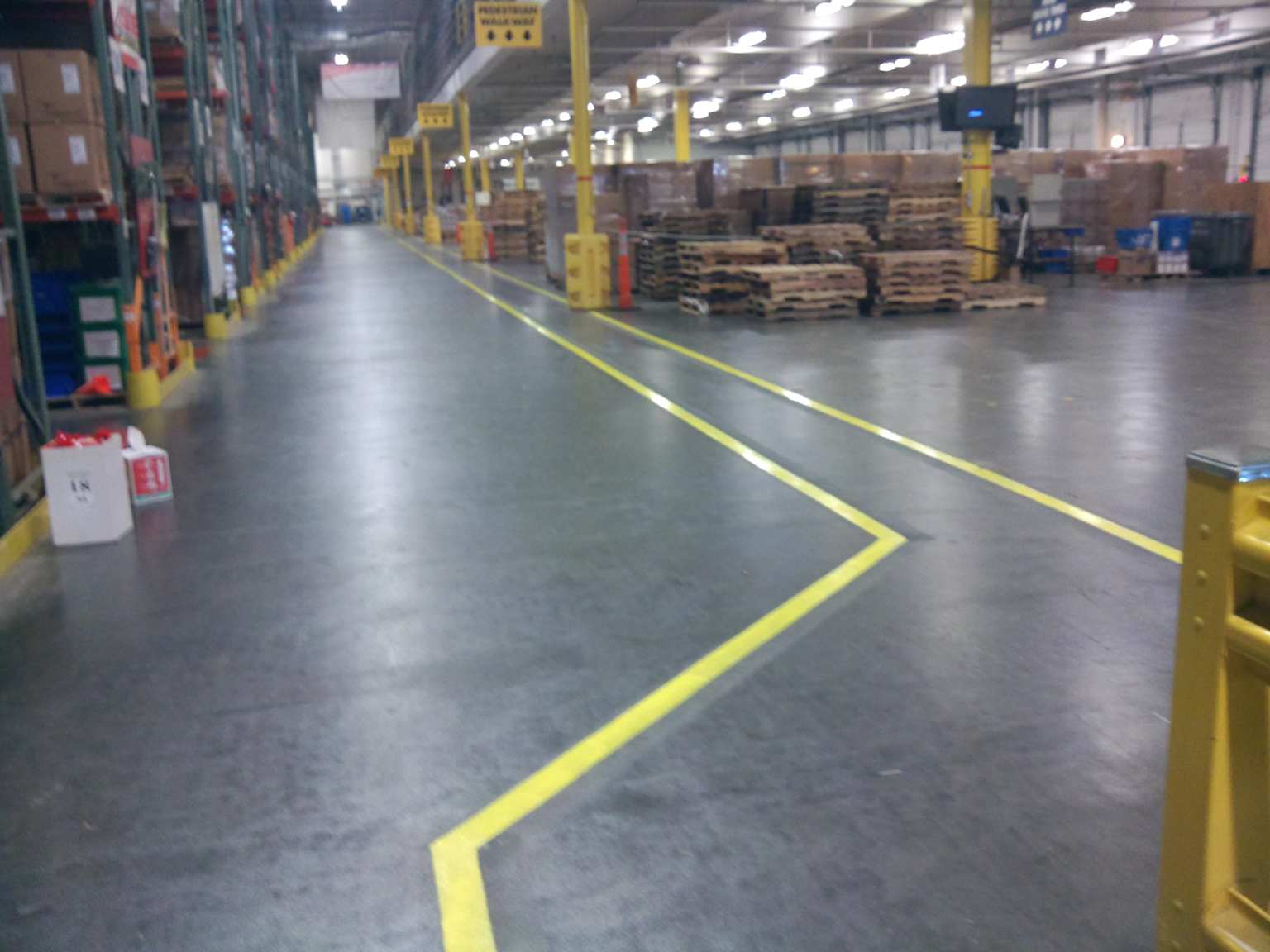
Commercial floor coatings are a different conversation than residential garage floors. The system has to handle higher traffic, harsher chemicals, and longer service intervals — and the install has to fit around your operating schedule. This page is for business owners and facility managers in the Elizabethtown area who need a commercial-grade floor solution for an actual working space.

Who commercial floor coating is for

Common Elizabethtown commercial coating projects include:

  • Auto service bays, mechanic shops, and tire shops
  • Warehouses and distribution facilities
  • Light industrial manufacturing floors
  • Commercial kitchens and food prep areas
  • Veterinary clinics and animal hospitals
  • Breweries, distilleries, and beverage production
  • Retail showrooms and customer-facing spaces
  • Fire stations, municipal garages, and public works facilities
  • Self-storage facility floors
  • Commercial fitness and gym floors

Common commercial coating systems

Standard high-build epoxy

The default for many warehouse and shop floors. A 100% solids epoxy basecoat plus an epoxy or urethane topcoat. Cost-effective for large square footage, durable enough for forklift traffic and most chemical exposure.

Polyaspartic for fast turnaround

When downtime is expensive, polyaspartic systems get the floor back in service in a fraction of the time. A full poly-on-poly system can be installed and back in vehicle service the next day. Costs more, but the operational savings often justify it on retail and service-bay floors.

Urethane and urethane cement

For severe-service environments — commercial kitchens, food production, breweries — urethane cement is the standard. It handles thermal cycling (hot water washdowns over a slab that was just under refrigeration), heavy chemical exposure, and steam better than epoxy.

Methyl methacrylate (MMA)

Specialty fast-cure system for cold-storage and freezer floors, or any application where a 2-hour cure is required. Pricier and more demanding to install, but unique in what it can do.

Static-dissipative (ESD) systems

Required in some manufacturing, electronics, and clean-room environments. The coating is conductive and grounds out static electricity rather than letting it build up.

High-traffic flake systems

Commercial flake builds with thicker basecoats, oversized flake, and double clear coats are common in retail, gym, and showroom environments where appearance matters.

Decorative quartz systems

Color quartz broadcast into an epoxy basecoat creates a textured, slip-resistant, easy-clean floor that's popular in kitchens, locker rooms, and entryways.

What we coordinate vs. what your installer will spec

This site connects you with a local commercial coating installer who can assess your floor, recommend the right system, and quote the work. The installer is the one who walks the slab, runs the moisture tests, looks at your operations, and writes the actual scope.

What helps speed that process up: the more detail you can share in the estimate request, the faster the installer can come prepared with the right answers. Useful detail includes square footage, slab age, what's currently on the floor, what chemicals or traffic the floor sees, your downtime tolerance, and any food-safety or industry-specific requirements.

Local considerations for Elizabethtown commercial floors

Operations and downtime

Most commercial owners can't shut down for a full week. Polyaspartic systems and night/weekend installs are how that gets handled. Be upfront about your operating hours and the longest acceptable downtime — it changes the system selection.

Slab condition

Older industrial buildings around Elizabethtown often have slabs with prior coatings, oil saturation, joint damage, and surface erosion. A good commercial installer will diagnose what's actually under the existing surface (sometimes coring the slab) before quoting.

Moisture testing

This matters more on commercial slabs than residential. Vapor emission and slab moisture are the most common causes of failed commercial coatings. Calcium chloride or in-situ RH testing should be part of any quality commercial scope.

Chemical exposure

The list of chemicals your floor sees should drive the system. A mechanic's bay sees brake cleaner, oil, antifreeze, transmission fluid, and gasoline. A brewery sees lactic acid, hot water, and steam. A vet clinic sees urine, antiseptics, and bleach. Each profile points to different topcoats.

Slip resistance

OSHA and many insurance carriers care about slip resistance in commercial settings. Anti-slip aggregate or texture additives are standard on customer-facing and wet-area floors.

Don't compare quotes by price alone. Two commercial coating quotes for the same square footage can vary by 50% or more — and the cheaper one is rarely the better deal once you account for system spec, mil thickness, prep, warranty, and downtime. Compare on apples-to-apples scope.

The commercial install process

  1. Site walk and assessment. Slab condition, moisture, existing coatings, chemical exposure, traffic, downtime constraints.
  2. System selection and written scope. Mil thickness, products, anti-slip rating, color.
  3. Schedule planning. Phasing if needed, off-hours work, equipment relocation.
  4. Mechanical prep. Shotblasting is standard for commercial; diamond grinding for smaller spaces.
  5. Repairs. Crack chasing, joint repair, spall and corner rebuilds.
  6. Primer and basecoat. Often with moisture-mitigating primer.
  7. Broadcast or pigmented body coat. Depends on system.
  8. Topcoat and cure. Anti-slip additive included where required.
  9. Walk-through and warranty handoff.

Cost factors

Commercial coating estimates vary widely. The biggest drivers:

  • Square footage (typically lower per sq ft as size increases)
  • System spec — urethane cement and ESD floors are far more expensive than standard epoxy
  • Slab condition and prep required
  • Off-hours, weekend, or phased installation
  • Moisture mitigation
  • Joint repair and crack chasing
  • Cove base or wall returns (common in food service and clean rooms)
  • Site logistics — equipment access, dust containment, ventilation

Timeline factors

Commercial timelines depend on system and square footage. Rough ranges:

  • Small commercial (under 2,000 sq ft): 2–4 days on-site
  • Mid-size (2,000–10,000 sq ft): 3–7 days, often phased
  • Large warehouse (10,000+ sq ft): 1–3 weeks, almost always phased
  • Polyaspartic systems can compress these timelines significantly

Repair, recoat, or replace?

For commercial floors, the recoat-vs-replace decision usually comes down to substrate condition:

  • Sound coating, worn topcoat: screen and recoat — quickest and cheapest path.
  • Localized damage in high-traffic areas: spot repair if isolated, full reinstall if widespread.
  • Coating delaminating or moisture-related failures: full removal, slab reconditioning, fresh install.
  • Chemical-spill or impact damage: may indicate the wrong system was originally spec'd.

The repair and recoat page has more on diagnosing failed coatings.

Questions to ask before accepting a commercial estimate

  • What's the spec'd mil thickness, and what's the manufacturer's data sheet for the product?
  • Will moisture testing be performed? What threshold triggers a moisture-mitigating primer?
  • What's the prep method (shotblast, grind, captive shot)?
  • What's the warranty against delamination, chemical attack, and abrasion?
  • What's the COF (coefficient of friction) target for slip resistance?
  • How will dust, fumes, and noise be managed during installation?
  • What's the phasing schedule, and what areas must remain operational during install?
  • What's the cure-to-service timeline by area?

Need a commercial floor scoped, quoted, and installed in Elizabethtown?

Request My Free Estimate

Related services

Commercial floor coating FAQs

Can the install happen overnight or on weekends?

Yes — many commercial installs are scheduled for off-hours specifically to avoid downtime. Polyaspartic systems are usually used for these jobs because of the fast cure.

Will my warehouse smell or be unusable while you work?

Modern systems have low VOCs and can typically be installed in occupied buildings with proper ventilation. The active install area is closed off, but adjacent areas usually remain functional.

Do you do food-safe and USDA-compliant floors?

Yes — urethane cement systems with cove base and integrated drainage are commonly installed for food production, breweries, and commercial kitchens. The local installer can spec to USDA, FDA, and other compliance requirements.

What's the warranty on a commercial floor?

Warranty terms vary by installer and system. Most commercial systems carry a written warranty against delamination, peeling, and manufacturing defects for a stated number of years. Always get the warranty in writing as part of the quote.

Can you coat a slab that has prior failed coatings?

Yes — but the prior coating typically has to be removed mechanically (shotblasting or grinding) and the substrate reconditioned before the new system goes down. The quote should reflect that removal cost.