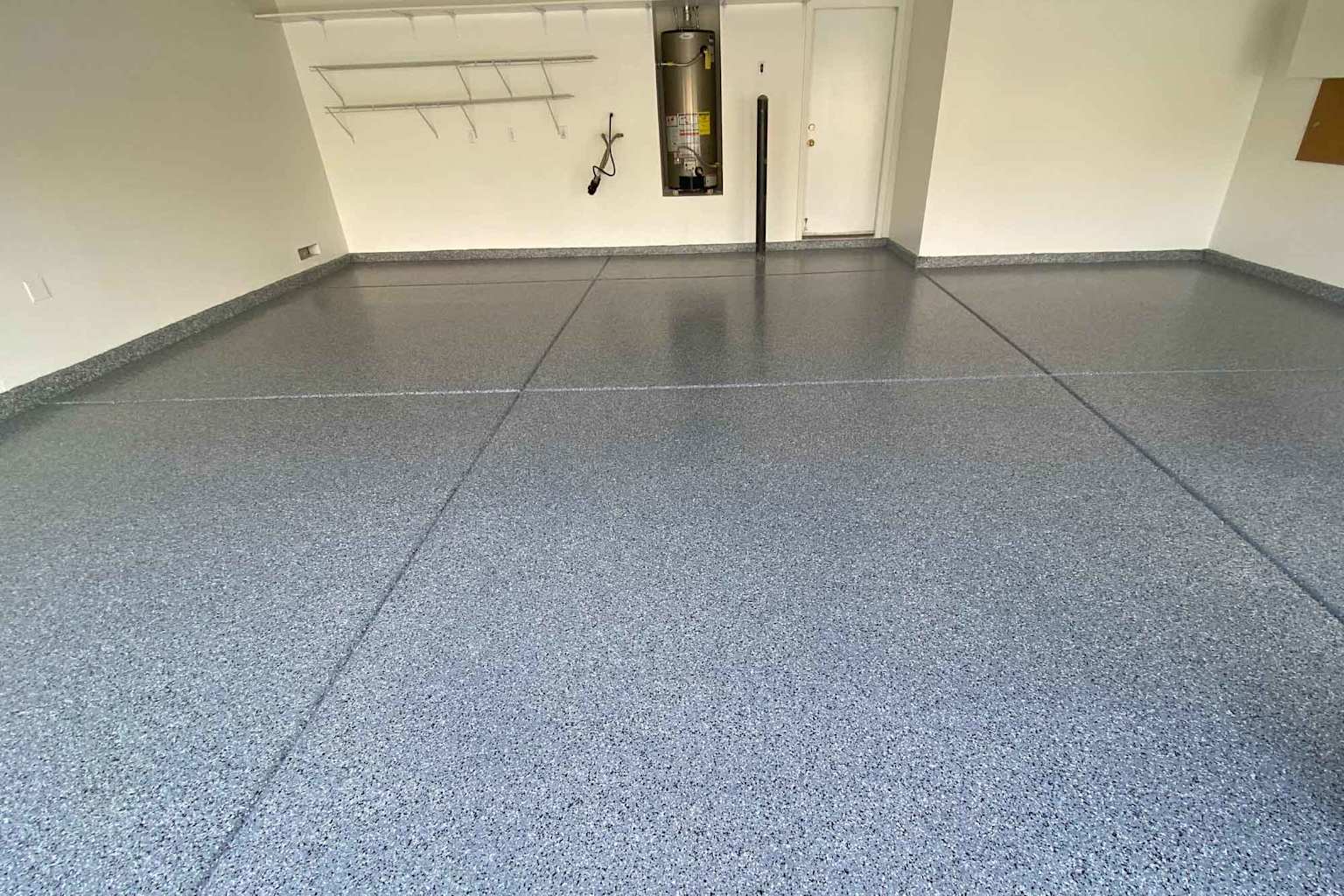
Flake floor systems — also called chip floors or full-broadcast vinyl floors — are the most popular decorative coating in residential Elizabethtown installs right now. The look is unmistakable: a multi-color confetti pattern of vinyl flakes locked under a clear polyaspartic or urethane topcoat. The reason it's everywhere isn't fashion. It's because the system actually performs: the texture hides minor slab imperfections, adds slip resistance, and stays gripping wet or dry.

Who flake floors are best for

Flake systems are usually the right call when:

  • You want a decorative finished look — not just sealed concrete
  • You'll be parking on the floor (the texture is grippy with hot or wet tires)
  • You have kids, pets, or boots tracking through — texture hides crumbs and footprints
  • The slab has minor surface imperfections you'd rather camouflage than fight
  • You want a one-day or two-day install in a working garage

If you're after a glassy showroom finish or a flowing pattern instead of texture, you're probably looking for metallic epoxy instead.

How a flake floor is built

"Flake floor" describes the look, but the actual system underneath varies. The common residential build looks like this:

  1. Diamond grinding the slab to open the concrete profile
  2. Crack chasing and joint repair on older slabs
  3. Pigmented basecoat — usually a 100% solids epoxy or fast-cure polyaspartic, in a color that complements the chip blend
  4. Full broadcast — vinyl flakes thrown to refusal into the wet basecoat
  5. Scrape and vacuum — loose flakes are removed and recaptured
  6. Polyaspartic clearcoat — usually one or two clear coats, sometimes with a fine anti-slip additive

The total finished system is typically 20–40 mils thick depending on flake size and number of clear coats — much thicker and tougher than any roll-on kit floor.

Flake size and color choices

Flake sizes

  • 1/4" flake — most common in residential garages. Visible from across the room without being chunky.
  • 1/16" or 1/32" flake — finer "salt and pepper" or "sand" look. Less aggressive texture, more subtle.
  • 1" flake / large flake — bold, high-contrast look popular in some commercial and showroom installs.

Color blends

Flake comes in dozens of pre-mixed blends and can be custom-mixed too. The most popular blends in this market lean toward grays, tans, and earth tones that hide road salt and dirt — but blue, red, and high-contrast blends are absolutely available, especially in workshops, man-caves, and basement bars.

Pick the basecoat color too. Even with a full broadcast, a small percentage of basecoat shows between flakes. A black basecoat under a gray-blend flake reads darker and more saturated; a tan basecoat under the same blend reads lighter and warmer. Ask the installer to bring sample boards.

Where flake floors work best in Elizabethtown homes

Garages

The number-one application. The textured surface stays grippy with hot tires, road salt from a winter morning at Fort Knox, and water dripping from a vehicle after a rainstorm. The flake also hides the routine wear that would show on a smooth solid-color floor.

Mudrooms and laundry rooms

The same advantage indoors — wet boots, dropped detergent, pet bowls. The texture grips wet feet and the surface mops easily.

Finished basements

A great alternative to luxury vinyl plank or stained concrete in finished basement spaces. It can handle occasional moisture (assuming the slab is sound and properly tested) and matches the durability of any commercial floor.

Sunrooms and covered patios

Flake systems work outdoors as long as the topcoat is fully UV stable. A polyaspartic or aliphatic urethane clearcoat handles UV without yellowing — but standard interior epoxy clearcoats should not be used on sun-exposed flake floors.

Workshops and barn floors

Out toward Glendale, Cecilia, or Sonora, the same flake systems work beautifully in pole barns and detached shops. The added grip is genuinely useful when you're moving equipment around.

Local considerations

Climate & install timing

Polyaspartic-based flake systems install in a wider temperature window than pure epoxy, which is why fast-cure flake systems are common year-round in heated Elizabethtown garages. In an unconditioned shop, late spring through early fall is the safest install window.

Slab moisture

Flake floors are still vulnerable to slab moisture. The basecoat needs to bond to dry concrete. Older basement slabs and on-grade slabs in low-lying parts of Hardin County may need moisture testing and a moisture-tolerant primer.

Drainage and slope

If you've got a garage with a floor drain or a slope toward the door, that won't change after coating — but the surface texture can affect how water moves. Talk through any drainage concerns with the installer up front.

Cost factors

Flake floor estimates vary based on:

  • Square footage
  • Slab condition and how much prep is needed
  • Flake density (full broadcast vs partial broadcast)
  • Number of clear coats
  • Color complexity (custom or premium blends cost more)
  • Border, two-tone, or design work
  • Cove or partial wall returns if requested

In general, flake systems sit between solid-color epoxy and metallic epoxy in price, with full polyaspartic flake systems at the higher end of that range.

Timeline factors

One of the biggest selling points of a polyaspartic-based flake system is speed. A typical residential garage flake floor:

  • One day on-site for prep + basecoat + broadcast
  • Same-day or next-morning scrape and vacuum, then clearcoat
  • Foot traffic same evening
  • Vehicles back on the floor in 24–48 hours

Larger projects, dual-coat clears, or rooms with significant repair work can push that out to 2–3 days.

Repair and recoat

Flake floors are easier to recoat than smooth coatings because the texture itself catches the new clear and binds well. Common situations:

  • Light wear in the clearcoat: screen and apply a fresh clearcoat. Floor looks new.
  • Hot-tire pickup spots: spot grind and re-clear. Possible if isolated.
  • Cracked basecoat or peeling system: usually a full-floor reinstall.

Questions to ask before accepting an estimate

  • What flake size and blend are we installing?
  • Full broadcast or partial broadcast?
  • One clear coat or two?
  • What basecoat color goes underneath the flake?
  • What product line is the topcoat?
  • Is anti-slip additive included in the topcoat?
  • How long until vehicles can return?

Want a flake floor in your garage, basement, or shop?

Request My Free Estimate

Related services

Flake floor FAQs

Is the texture rough on bare feet?

Standard 1/4" flake systems with two clear coats are pleasantly textured but not abrasive. You can walk on them barefoot all day. If you want a smoother feel — say, in a basement bar — request additional clearcoat or a finer flake size.

Will it stain from oil drips or salt?

The clearcoat is what protects against staining, and a quality polyaspartic clear is highly resistant to oil, salt brine, and most household chemicals. Wipe up spills when you notice them, but the surface won't be ruined by a drip you missed for a few days.

Can I match a specific paint color or design?

Custom flake blends can usually be mixed to coordinate with garage walls, cabinets, or design preferences. Ask the installer to show you sample boards before committing.

Does it have to be installed in summer?

No — polyaspartic-based systems install year-round in conditioned spaces. Unheated detached garages and shops are easier in mild weather, but heated attached garages can be done in winter.