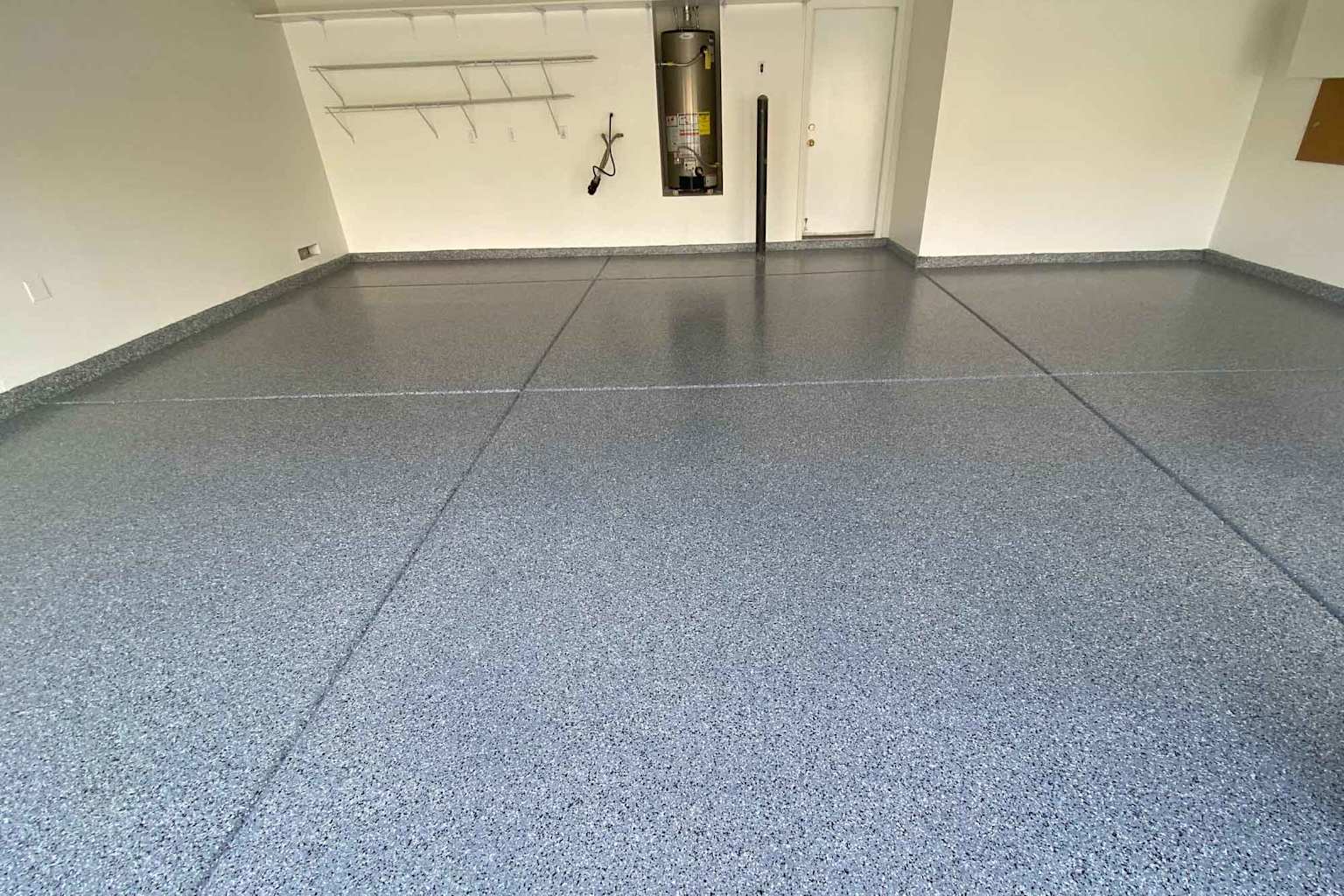
The garage is the most-coated room in any Elizabethtown home, and for good reason. It's the floor that takes the worst of the season — road salt and slush in February, oil drips year-round, hot tires baking onto bare concrete in July, and a rolling tool chest that loves to leave gouges in unprotected slab. A proper coating turns that surface into something you can hose down, sweep clean, and actually want to step on barefoot.
Who a coated garage floor is best for
Coated garage floors make sense for homeowners who:
- Park daily-driver vehicles in the garage and want a surface that handles hot tires
- Use the garage as a workshop, gym, or hobby space and want it to feel like a finished room
- Have older slabs with surface staining, light spalling at the door, or rough trowel marks
- Are tired of dust coming off bare concrete every time something gets dropped
- Are prepping a home for sale and want a clean upgrade buyers notice immediately
For unconditioned detached garages out toward Cecilia, Sonora, or Hodgenville, the conversation shifts a little — those slabs swing through bigger temperature ranges, so the system choice (and install timing) matters more.
Polyaspartic vs epoxy: which is better for a garage?
Most quality residential garage installations in this market use a polyaspartic-based system, often paired with a flake broadcast. Here's the practical difference:
Polyaspartic systems
Polyaspartic is a fast-cure, UV-stable coating that's become the residential garage standard. It cures fast enough that many one-day garage installs are possible, it doesn't yellow in sunlight near a south-facing garage door, and it shrugs off hot tires that often peel cheaper coatings. The downside is cost: poly systems are usually 20–40% more expensive than basic epoxy.
Solid-color epoxy
Traditional 100% solids epoxy is still a solid choice, especially in basements and shops where UV exposure is limited and budget matters. It cures slower, takes longer to return to service, and can yellow in direct sun, but it's a tough wear surface and a great base for a flake or topcoat system.
Hybrid systems
Most flake floors you see in newer Elizabethtown garages are actually a hybrid — an epoxy basecoat for build and adhesion, then a polyaspartic clearcoat for hot-tire and UV resistance. That combination gets you the price advantage of epoxy on the bottom and the durability advantage of polyaspartic on top.
What the install actually involves
A real garage floor coating job is mostly prep. The coating itself goes down quickly — it's the steps before that determine whether it lasts 2 years or 12.
- Move-out and protection. Garage gets emptied. Walls, drywall, and doors get masked.
- Mechanical prep. The slab is diamond-ground (or shotblasted on commercial jobs) to open the concrete pores. This is the single biggest difference between a long-lasting floor and a peeling one.
- Crack and joint repair. Hairline cracks get chased and filled with a polymer repair product. Spalled edges at the garage door usually get rebuilt.
- Basecoat. Pigmented epoxy or polyaspartic basecoat is applied wet.
- Flake broadcast (if applicable). Flakes are broadcast to refusal into the wet basecoat for the chip-floor look.
- Scrape and vacuum. Loose flake is scraped off and vacuumed.
- Clearcoat. A polyaspartic or urethane clear topcoat seals everything in.
- Cure. Foot traffic same day or next, vehicles 24–72 hours later depending on system.
Local considerations for Elizabethtown garages
Slab age and condition
Older homes around downtown Elizabethtown and the established neighborhoods often have slabs poured before modern moisture barriers were standard. That doesn't disqualify them — it just means a moisture-tolerant primer may be needed. Newer construction in subdivisions like Heartland Park typically has cleaner slabs that grind well and accept coatings with minimal repair.
Detached garages and pole barns
A lot of Hardin County properties have a detached garage or a pole-barn shop in addition to the attached garage. These are usually unconditioned, so the install needs to happen during a comfortable temperature window — late spring through early fall is ideal.
Front edge and driveway transition
The first 18 inches inside the garage door takes more abuse than anything else: salt, snow melt, water dripping off vehicles, and UV through the open door. A quality install should not stop short of that area, and may include a small return down to the apron if the slab is in good shape.
Cost factors
We don't quote prices on this site because real numbers depend on your specific floor. The factors that move a garage floor estimate up or down:
- Square footage. Bigger slabs are usually cheaper per square foot. A two-car garage and a four-car garage will not double in price.
- Slab condition. A clean, recent slab needs less prep than one with oil staining, spalled edges, and old paint.
- System choice. Polyaspartic with flake will typically cost more than solid-color epoxy.
- Color and complexity. Custom flake blends, two-color borders, and design elements add labor.
- Repairs. Crack chasing, spall repair, and joint filling add cost on older slabs.
- Access. A walk-out detached garage is easier to work in than one packed full of stored items the homeowner needs the crew to move.
Timeline factors
Most residential garages in the Elizabethtown area can be coated in one or two days on-site, depending on prep work and weather. The full schedule from estimate to drive-on usually looks like:
- Estimate: usually within a week of submitting your request
- Schedule lead time: 1–4 weeks depending on season (spring is busy)
- On-site install: 1–2 days
- Foot traffic: same day to next morning (polyaspartic) or 24 hours (epoxy)
- Vehicle traffic: 24–72 hours after final coat
Repair, recoat, or replace?
If you've got an existing garage coating that's failing, it's worth getting it looked at before assuming the worst:
- Sound coating, faded clearcoat: often just a topcoat refresh.
- Spotty hot-tire pickup: spot grind and recoat may be enough.
- Peeling in sheets: usually a prep failure; full removal and reinstall.
- Bubbling and blistering: moisture issue underneath; needs diagnosis first.
Tell the installer what you're seeing in the estimate request and they can plan the visit accordingly. There's a separate page on repair, recoat, and rescue work if you want more detail.
Questions to ask before you accept an estimate
An honest estimate from any installer should include answers to these:
- What brand and product line are you installing? (Get the actual product name in writing.)
- Is the slab being diamond-ground or shotblasted? Or are you acid-etching?
- How are cracks and joints being treated?
- Is the topcoat polyaspartic, urethane, or epoxy?
- What is the total mil thickness of the finished system?
- How long until vehicles can return to the garage?
- What's the warranty against peeling, hot-tire pickup, and delamination?
You don't need to grill the installer — but knowing what to listen for makes it much easier to compare two written estimates apples-to-apples.
Ready to talk about your garage floor?
Request My Free EstimateRelated services
- Flake floor systems — the textured chip-floor look in detail
- Metallic epoxy — for high-end, statement garage floors
- Epoxy flooring overview — solid-color systems and indoor applications
- Failing or peeling existing floor?
- Shop, warehouse, or commercial garage
Garage floor coating FAQs
Will my floor be slippery when wet?
Flake systems naturally add texture and feel grippy underfoot, even when wet. Smooth solid-color and metallic floors can be slick when wet, but the topcoat can be modified with a fine anti-slip additive on request — common in garages with a side door from the driveway.
Can I park on the floor in the winter?
Yes. A properly installed polyaspartic system handles cold tires, road salt, and brine without issue. The clearcoat is what protects against salt staining, so don't skip the topcoat to save money.
How do I clean it?
Most owners use a soft-bristle broom and a mop with mild soap and water. For heavier cleanup, a pressure washer at moderate pressure is fine. Avoid harsh acid cleaners.
Do you cover the cove (where floor meets wall)?
Standard installs go up to the bottom of the drywall or wall edge with a clean line. A small cove-up the wall is available on request and is more common in commercial work.